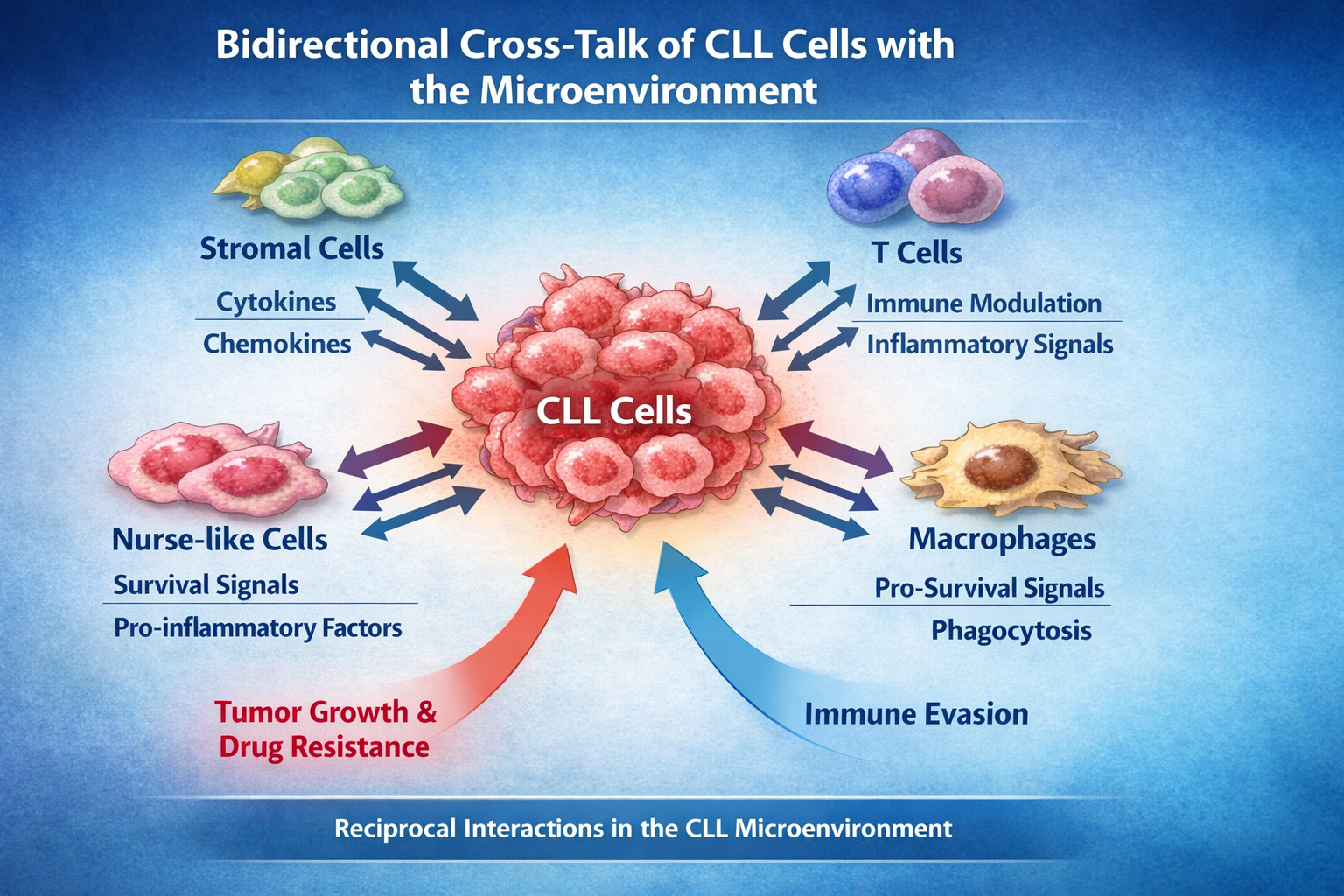
Bidirectional Cross-talk of CLL cells with the microevironment
 Laura Gardano
Associate Professor
Laura Gardano
Associate Professor
The central objective of this project to understand how CLL cells dynamically interact with stromal cells and how these interactions influence disease progression. 2025 ??? –2029, grant ???
Using flow cytometry, cell sorting, and advanced imaging approaches, CLL cells are distinguished based on their adhesion to stromal cells. This allow to study adherent and non-adherent cell populations and uncover functional differences between them. β-catenin appears to play a key role in regulating the balance between adhesion and non-adhesion states. Notably, in non-adherent CLL cells, β-catenin localizes to the nucleus, suggesting a potential transcriptional function. Using, ChIP-seq approach, the role β-catenin as gene regulator in response to microenvironment cues will be analysed.
Microenvironmental Reprogramming CLL cells actively modify their microenvironment to support their own survival and expansion. To systematically characterize this microenvironment reshaping, the transcriptome and proteome of stromal cells upon co-culture with CLL cells have been analysed. Cell adhesion processes are prominently affected in both datasets. In addition, metabolic pathways are strongly represented among differentially expressed proteins and transcripts.
Spheroids and mechanical stress the invasion of CLL cells of the lymph nodes and their structural desorganisation suggests that CLL cells could affect the mechanosensing in stroma. 3D cultures, such as spheroids, are the ideal model to investigate the role of mechnotransduction in the communication of CLL cells with stromal.